
NGTV ENGLISH | FLOOD ALERT
RIVERS ABOVE DANGER MARK IN BENGAL–BIHAR BELT: FARAKKA UNDER PRESSURE AS DAM RELEASES REMAIN A KEY CONCERN
KOLKATA | AUGUST 28, 2026
A serious flood-risk situation is developing across the lower Ganga basin, with river levels rising sharply across parts of West Bengal and Bihar. The focus is now firmly on Farakka, the Ganga system and the major reservoirs feeding Bengal’s downstream rivers.
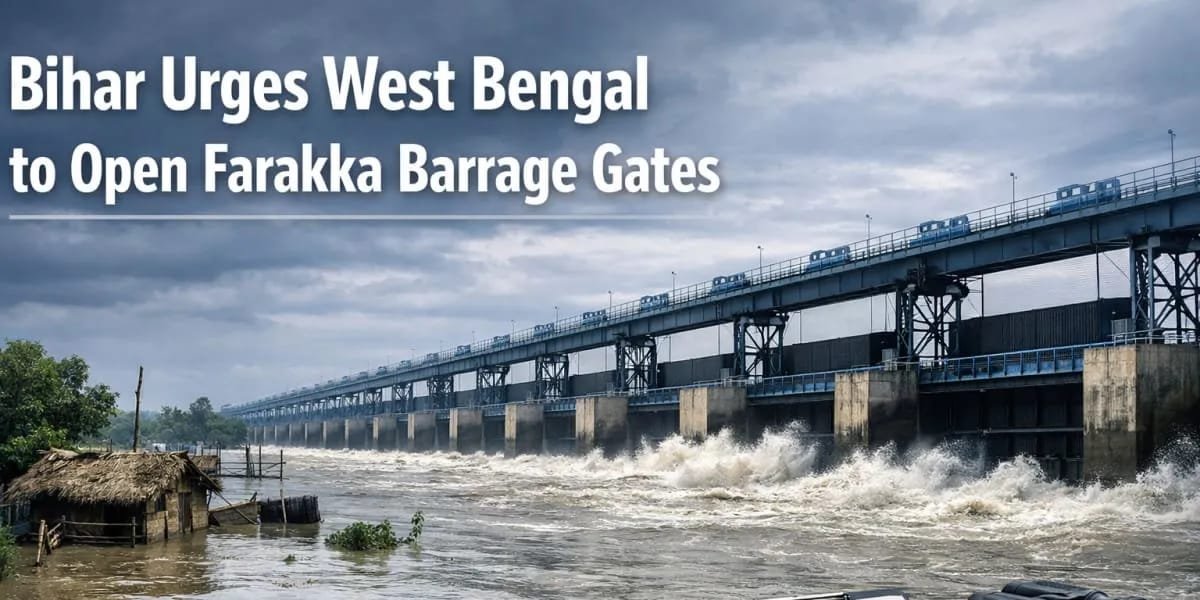
At Farakka in Murshidabad, the Ganga has crossed its official danger level. The latest reported level has reached around 22.77 metres against a danger mark of 22.25 metres, while discharge from the Farakka Barrage has been reported at approximately 11.5 lakh cusecs. Authorities are closely monitoring vulnerable downstream areas including Samserganj, Suti, Lalgola, Jiaganj and adjoining riverine belts.
The situation is particularly sensitive because the Ganga is already running above danger levels at several locations further upstream and downstream. Bihar’s official real-time flood monitoring system shows the Ganga above danger level at locations including Kahalgaon, Sultanganj, Sahibganj and other stations, while several other major rivers are also above their respective danger marks.
THE DAM RELEASE QUESTION
The major concern now is not simply whether water is being released, but how much additional water the downstream river system can absorb.
The Damodar Valley Corporation operates major reservoirs including Maithon and Panchet, which play a critical role in regulating the Damodar basin. DVC’s own flood-management protocol states that warnings are communicated before water is released through spillway gates.
However, reports on August 28 indicate that Bengal’s rivers are already rising and several have crossed danger levels. There have also been political disagreements over DVC water releases, although reports indicate no fresh DVC release was planned for Saturday.
WHY THE NEXT 48–72 HOURS MATTER
The weather factor could make the situation more complicated.
The India Meteorological Department has forecast widespread rainfall over Gangetic West Bengal, Sub-Himalayan West Bengal, Jharkhand and Odisha, with isolated heavy rainfall continuing over Bengal during the coming days. Heavy rainfall is also expected in parts of Jharkhand—the catchment region of several rivers and reservoirs that eventually affect southern Bengal.
This creates a potentially dangerous combination:
Heavy upstream rainfall + already swollen rivers + high reservoir inflow + additional dam releases = significantly increased downstream flood risk.
COULD BANGLADESH BE AFFECTED?
Yes—but the extent cannot yet be predicted with certainty.
Farakka lies upstream of Bangladesh, where the Ganga continues as the Padma. If exceptionally large volumes continue downstream while Bangladesh’s own rivers and tributaries are simultaneously swollen by rainfall, low-lying areas along the Padma basin could face increasing flood pressure.
However, it would be incorrect to claim that opening Farakka gates automatically means Bangladesh will flood. Gate operation is a controlled hydrological process, and the actual impact depends on river levels, rainfall, upstream inflow, discharge volume, timing and downstream carrying capacity.
NGTV ENGLISH ANALYSIS
The immediate threat is therefore not necessarily a sudden “dam burst” scenario, but a progressively worsening flood situation if river levels continue rising and reservoirs are forced to release additional water.
The next 48 to 72 hours will be crucial.
If rainfall weakens and reservoir inflows decline, the situation could stabilise.
If heavy rain continues across Bengal, Jharkhand and upstream catchments while the Ganga remains above danger level, Murshidabad, Malda, parts of South Bengal and downstream Bangladesh could experience heightened flood vulnerability.
For now, authorities and residents in vulnerable riverine areas should remain alert, follow official evacuation or flood advisories and avoid treating unverified social-media claims about “all gates being opened” as confirmed information.
NGTV ENGLISH will continue monitoring the Farakka Barrage, DVC reservoirs, Ganga and other major river levels for further developments.