
NGTV NEWS | DEBATE SPECIAL
IS INDIA BECOMING TOO DEPENDENT ON DIGITAL GOVERNANCE?
KOLKATA | SEPTEMBER 1, 2026
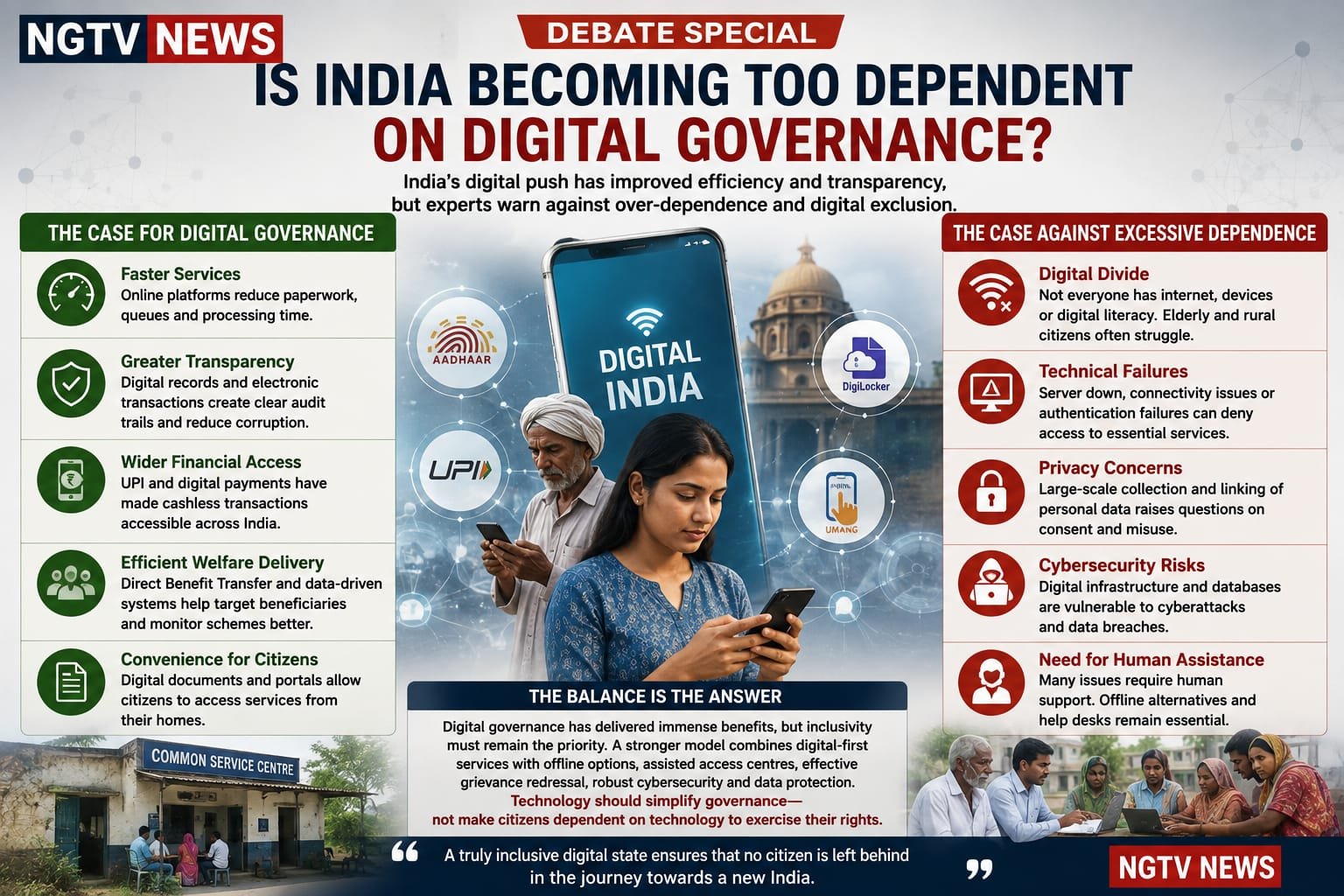
India’s digital transformation has fundamentally changed how citizens interact with government. Aadhaar, UPI, DigiLocker, UMANG and Direct Benefit Transfer have made identification, payments, documentation and welfare delivery faster and more convenient. But as more public services move online, a difficult question deserves attention: Is India becoming too dependent on digital governance?
THE CASE FOR DIGITAL GOVERNANCE
- Faster public services: Online platforms can reduce paperwork, queues and processing time, allowing citizens to access services from their homes.
- Greater transparency: Digitised records and electronic transactions can create clearer audit trails and reduce opportunities for certain forms of corruption.
- Wider financial access: Digital payment infrastructure has made cashless transactions increasingly accessible across the country.
- Efficient welfare delivery: Technology can help governments transfer benefits directly to eligible beneficiaries and improve monitoring of public programmes.
- Convenience: Digital documents and government portals can allow citizens to access information and services without repeatedly visiting government offices.
THE CASE AGAINST EXCESSIVE DEPENDENCE
- Digital divide: Not every citizen has reliable internet, a suitable device or sufficient digital literacy. Elderly people and communities in poorly connected areas can face particular difficulties.
- Technical failures: When an essential service becomes completely dependent on a digital system, server failures, connectivity problems or authentication issues can disrupt access.
- Privacy concerns: Large-scale collection and linking of personal information raises legitimate questions about data protection, consent and responsible use.
- Cybersecurity risks: Government databases and digital infrastructure can become targets for cyberattacks, potentially affecting large numbers of citizens.
- Human assistance matters: Some cases cannot be resolved through automated portals. Citizens may still need accessible officials, help desks and offline alternatives.
THE BALANCING QUESTION
The debate is therefore not about rejecting technology. India’s digital infrastructure has created significant opportunities for faster and more transparent governance. The concern is whether digital convenience could gradually become a digital barrier for citizens unable to navigate online systems.
A stronger model would combine digital-first services with reliable offline alternatives, assisted access centres, effective grievance redressal, robust cybersecurity and clear data-protection safeguards.
NGTV NEWS | DEBATE SPECIAL
Technology should simplify governance—not make citizens dependent on technology to exercise their rights.