

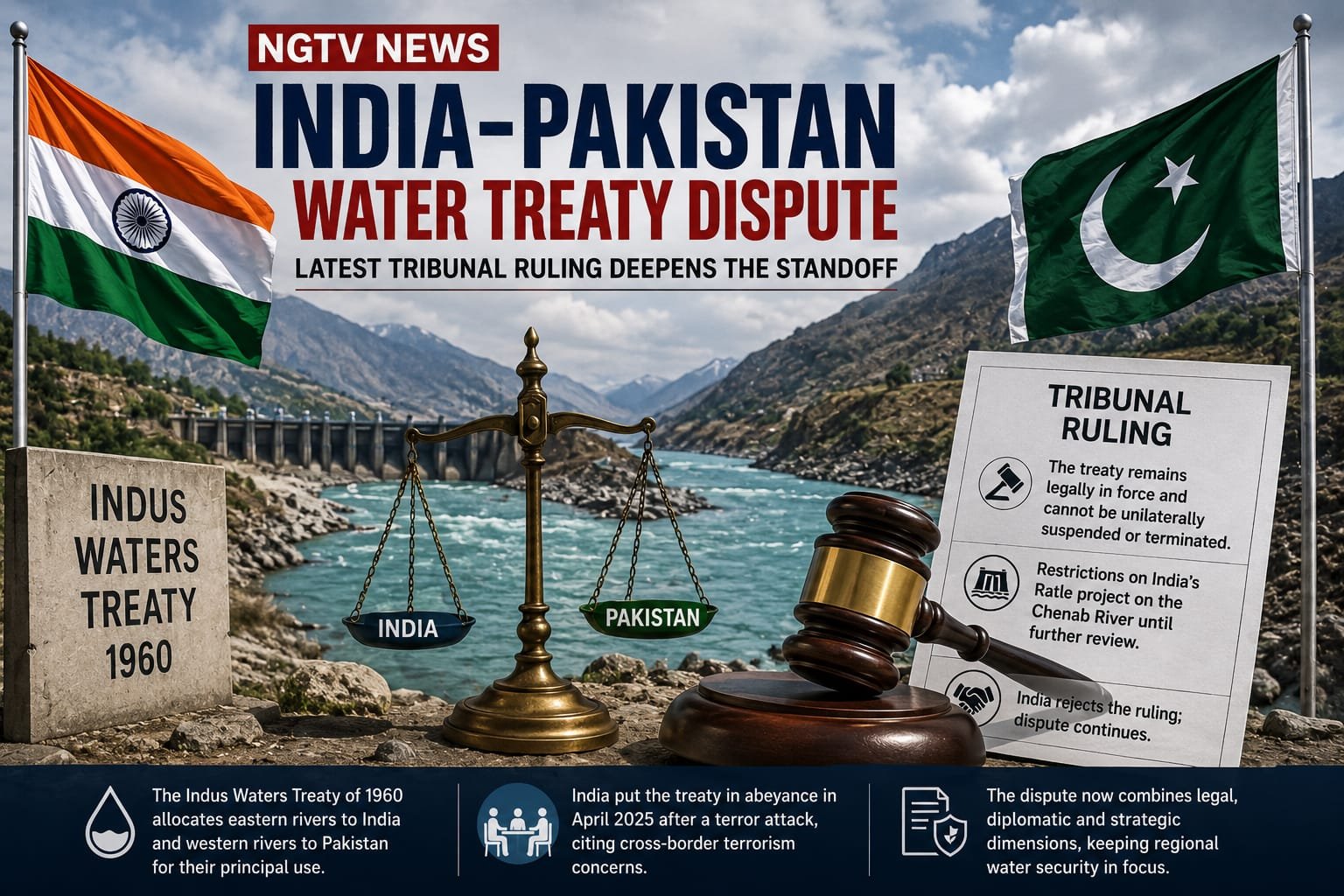
NG TV NEWS | SPECIAL REPORT
INDIA-PAKISTAN WATER TREATY DISPUTE: LATEST TRIBUNAL RULING DEEPENS THE STANDOFF
KOLKATA | SEPTEMBER 1, 2026
The long-running India-Pakistan dispute over the Indus Waters Treaty of 1960 has entered a fresh phase after an international Court of Arbitration issued a major ruling on August 31, 2026. The tribunal held that the treaty remains legally in force and cannot be unilaterally suspended or terminated by either country.
The development follows India’s decision in April 2025 to place the treaty in abeyance after the deadly Pahalgam terror attack. New Delhi had linked the move to its broader concerns over cross-border terrorism, while Pakistan rejected any involvement in the attack. The dispute subsequently became intertwined with wider diplomatic and security tensions between the two neighbours.
Under the 1960 agreement, the eastern rivers—Ravi, Beas and Sutlej—are largely allocated to India, while Pakistan receives the principal use of the western rivers—Indus, Jhelum and Chenab, subject to specified rights and restrictions. The treaty has survived wars and repeated periods of hostility, making the latest dispute particularly significant for regional water security.
The tribunal has also issued interim measures concerning India’s Ratle hydroelectric project on the Chenab River. Certain construction work on the dam wall and power intake structure has been restricted until 90 days after a separate neutral expert delivers a decision on whether the project’s design complies with the treaty. That decision is currently expected around July 2027.
India, however, has rejected the tribunal’s authority and ruling, maintaining that the body was illegally constituted and has no jurisdiction over India’s sovereign decisions. India has not participated in the arbitration proceedings and has reiterated that its decision to keep the treaty in abeyance remains in force.
The latest ruling therefore does not end the dispute. Instead, it creates a complicated legal and diplomatic situation in which the tribunal considers the treaty binding, while India refuses to recognise its authority.
For Pakistan, the treaty remains critical to agriculture and water security. For India, the dispute is increasingly linked to national security, sovereignty and the management of its western-river hydroelectric projects.
The next major development could come from the separate neutral-expert process, keeping the water dispute firmly on the regional diplomatic agenda.
NG TV NEWS | SPECIAL REPORT
When water becomes a question of law, security and sovereignty, every river carries political weight.