
NGTV NEWS | HOME BUSINESS GUIDE
How to Start a Homemade Snacks Business From Home: Investment, Pricing and Profit Explained
KOLKATA: For many aspiring entrepreneurs, starting a food business does not necessarily require a shop, expensive equipment or a large workforce. A homemade snacks business can begin from a kitchen with a modest investment—provided the product, pricing, hygiene and marketing are planned carefully.
STEP 1: Choose the Right Product
Start with two or three products rather than a large menu. Popular options could include nimki, chanachur, cookies, mathri, banana chips, baked snacks or traditional Bengali savouries. Choose products that have a reasonable shelf life and can be prepared consistently.
STEP 2: Estimate the Initial Investment
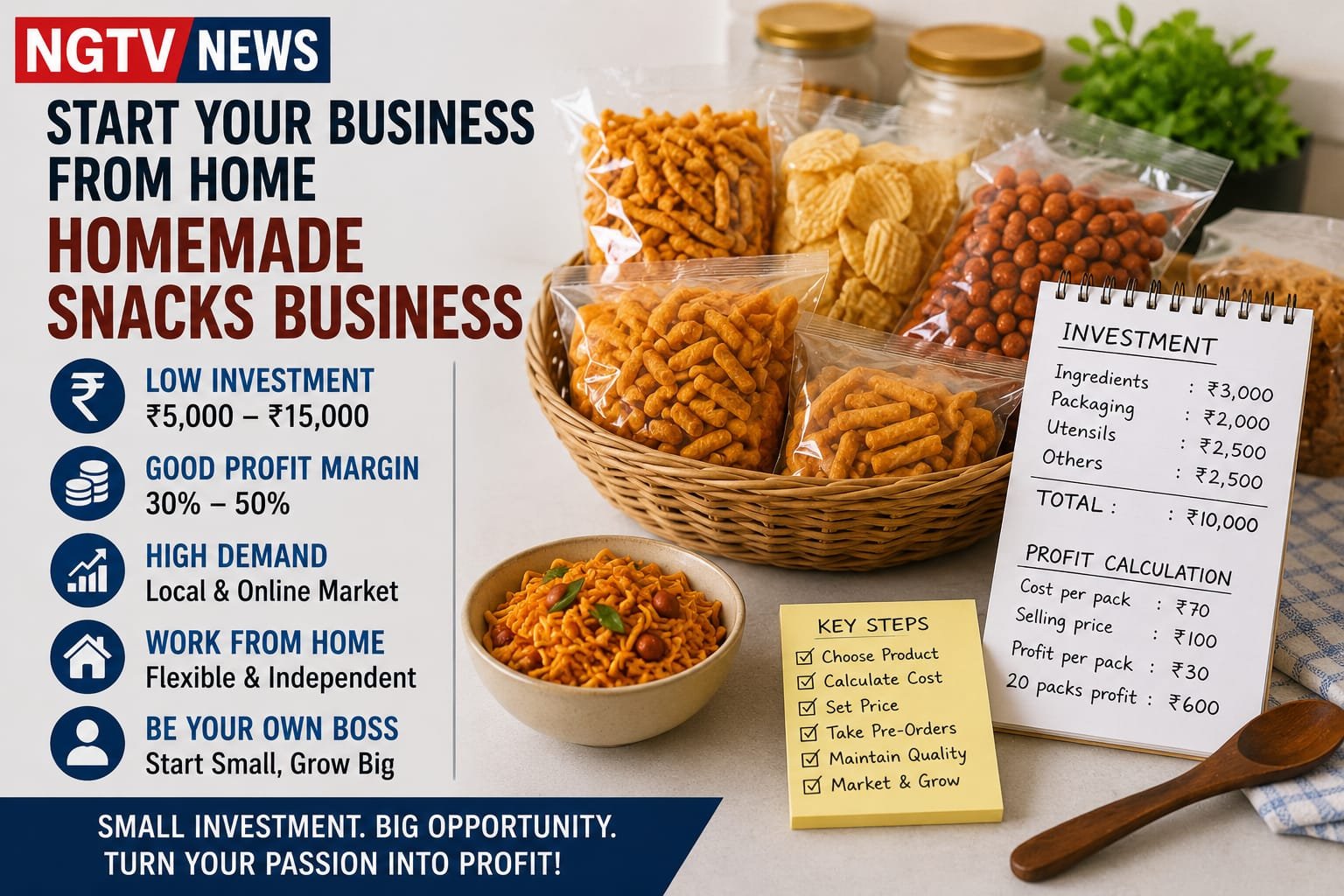
A small home setup could begin with approximately ₹5,000–₹15,000, depending on what equipment is already available.
A sample ₹10,000 budget could include:
- Ingredients: ₹3,000
- Packaging: ₹2,000
- Basic utensils/equipment: ₹2,500
- Labels and promotional material: ₹1,000
- Hygiene and miscellaneous expenses: ₹1,500
The exact amount will vary according to the product and scale.
STEP 3: Calculate the Cost Properly
One of the biggest mistakes beginners make is pricing only according to ingredient costs.
Suppose 20 packets of snacks require:
- Ingredients: ₹800
- Oil/gas/electricity: ₹200
- Packaging: ₹200
- Delivery/other expenses: ₹200
Total cost = ₹1,400
Therefore, the cost per packet is ₹70.
If each packet is sold for ₹100, the gross contribution is ₹30 per packet. Selling all 20 packets gives ₹2,000 revenue and ₹600 remaining after the listed costs.
STEP 4: Decide the Selling Price
A practical formula is:
Selling Price = Total Cost Per Unit + Desired Profit
However, also check what customers are willing to pay for comparable products. Never sacrifice food quality simply to offer the cheapest price.
STEP 5: Start With Pre-Orders
Instead of producing large quantities and risking wastage, begin with pre-orders from neighbours, friends and local communities. This reduces inventory risk and gives you an early indication of which products actually sell.
STEP 6: Build Trust
Clean preparation, sealed packaging, accurate weight, ingredient information and consistent taste are essential. In India, food businesses are required to obtain appropriate FSSAI registration or licensing. From 1 April 2026, businesses with annual turnover up to ₹1.5 crore fall under the registration category, according to FSSAI.
STEP 7: Grow Gradually
Once regular customers are established, introduce combo packs, festive boxes and subscription orders. Maintain a simple record of sales, ingredient costs, packaging, delivery, wastage and profit every month.
For younger entrepreneurs, business activities involving food preparation, payments and regulatory requirements should be handled with appropriate adult supervision.
NGTV NEWS | BUSINESS DESK
The figures above are illustrative. Actual investment and profit will depend on ingredients, packaging, location, selling price, wastage and order volume.