
KRISHNA AND RADHA: UNDERSTANDING THEIR SPIRITUAL SIGNIFICANCE
A timeless symbol of divine love and devotion
NG TV NEWS
Kolkata, September 2: As Janmashtami approaches, the story of Lord Krishna and Radha once again comes into focus—not simply as a tale of love, but as one of the most enduring spiritual themes in Indian devotional tradition. Their relationship has been interpreted for centuries as a symbol of the connection between the individual soul and the Divine.
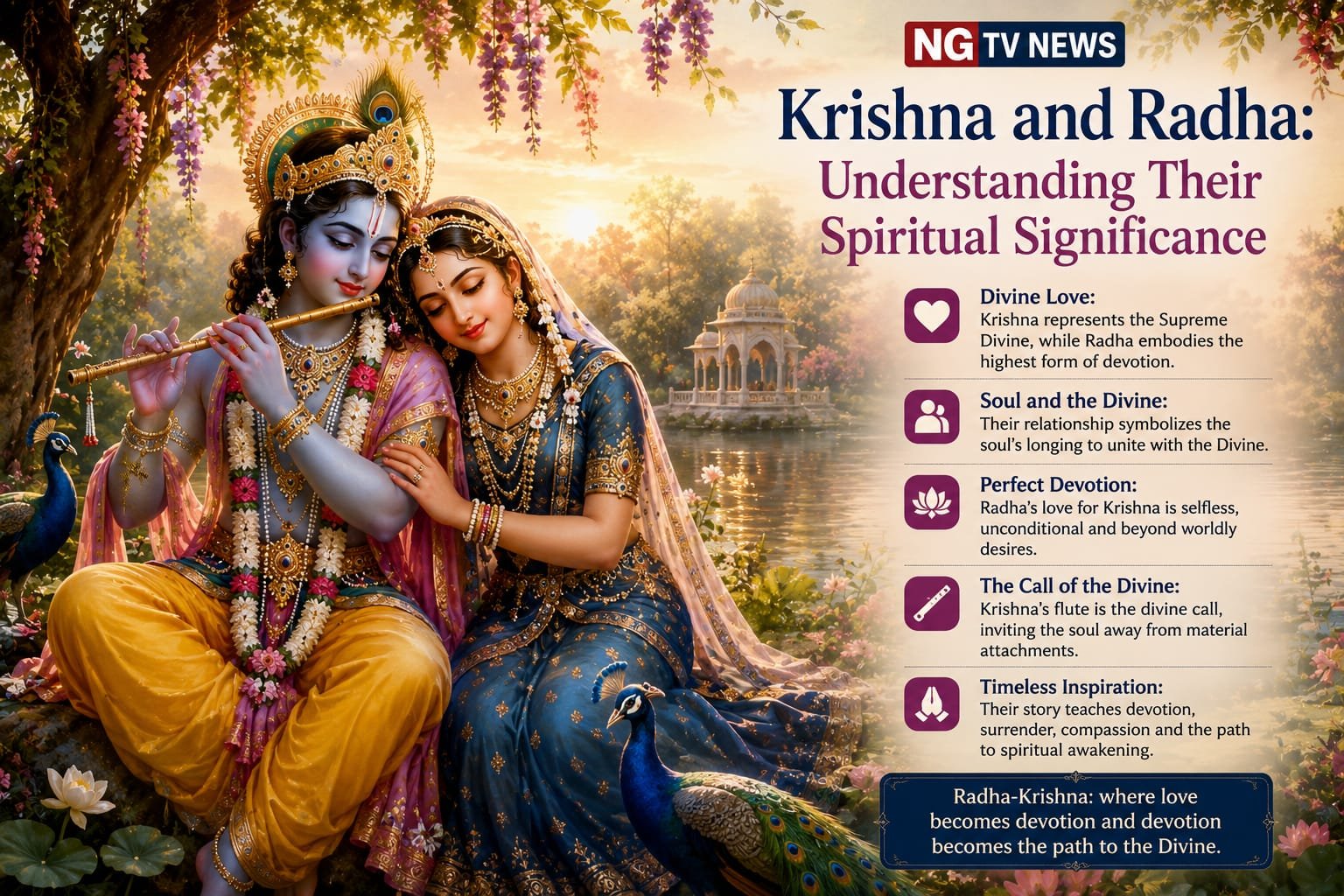
In Vaishnava traditions, Krishna represents the Supreme Divine, while Radha is often understood as the embodiment of the highest form of devotion, or bhakti. Their relationship is therefore viewed differently from an ordinary romantic relationship. Radha’s longing for Krishna is traditionally interpreted as the soul’s longing to experience and unite with the Divine.
RADHA: THE SYMBOL OF DEVOTION
Radha occupies a distinctive place in Krishna devotion. Although her story appears in different forms across devotional literature and traditions, she is particularly prominent in later Vaishnava traditions. Her devotion is portrayed as selfless and unconditional, with little emphasis on personal reward.
For devotees, Radha represents complete surrender. Her spiritual significance lies in the idea that genuine devotion does not depend on material gain or personal expectations. It is an emotional and spiritual search for closeness to the Divine.
KRISHNA AND THE IDEA OF DIVINE LOVE
Krishna’s association with Radha and the gopis of Vrindavan is central to several devotional traditions. The Rasa Lila, in particular, has been interpreted symbolically as the Divine responding to the sincere devotion of individual souls.
The famous image of Krishna playing his flute carries a similar spiritual message. In devotional interpretation, the flute’s call represents the Divine calling the human soul away from worldly distractions and towards spiritual awareness.
WHY THEIR STORY STILL MATTERS
The enduring appeal of Radha and Krishna lies in the values their story represents: devotion, surrender, compassion, longing and spiritual connection. Their relationship has inspired generations of poets, musicians, painters and devotees across India.
Importantly, Radha and Krishna are not worshipped in exactly the same way across every Hindu tradition. Their significance varies according to theological school and regional practice. Yet, in many devotional traditions, their names are inseparable because Radha is seen as the highest expression of love directed towards Krishna.
As Janmashtami celebrations approach, their story offers a message that extends beyond ritual. It asks a deeper question: Can devotion transform ordinary human emotion into a search for something greater than oneself?
For millions of devotees, the answer lies in the timeless invocation of Radha-Krishna—a spiritual ideal in which love becomes devotion and devotion becomes a path towards the Divine.
NG TV NEWS | MYTHOLOGY & CULTURE DESK
This feature presents traditional religious beliefs and interpretations for cultural and informational purposes.