
NGTV NEWS | DEBATE DESK
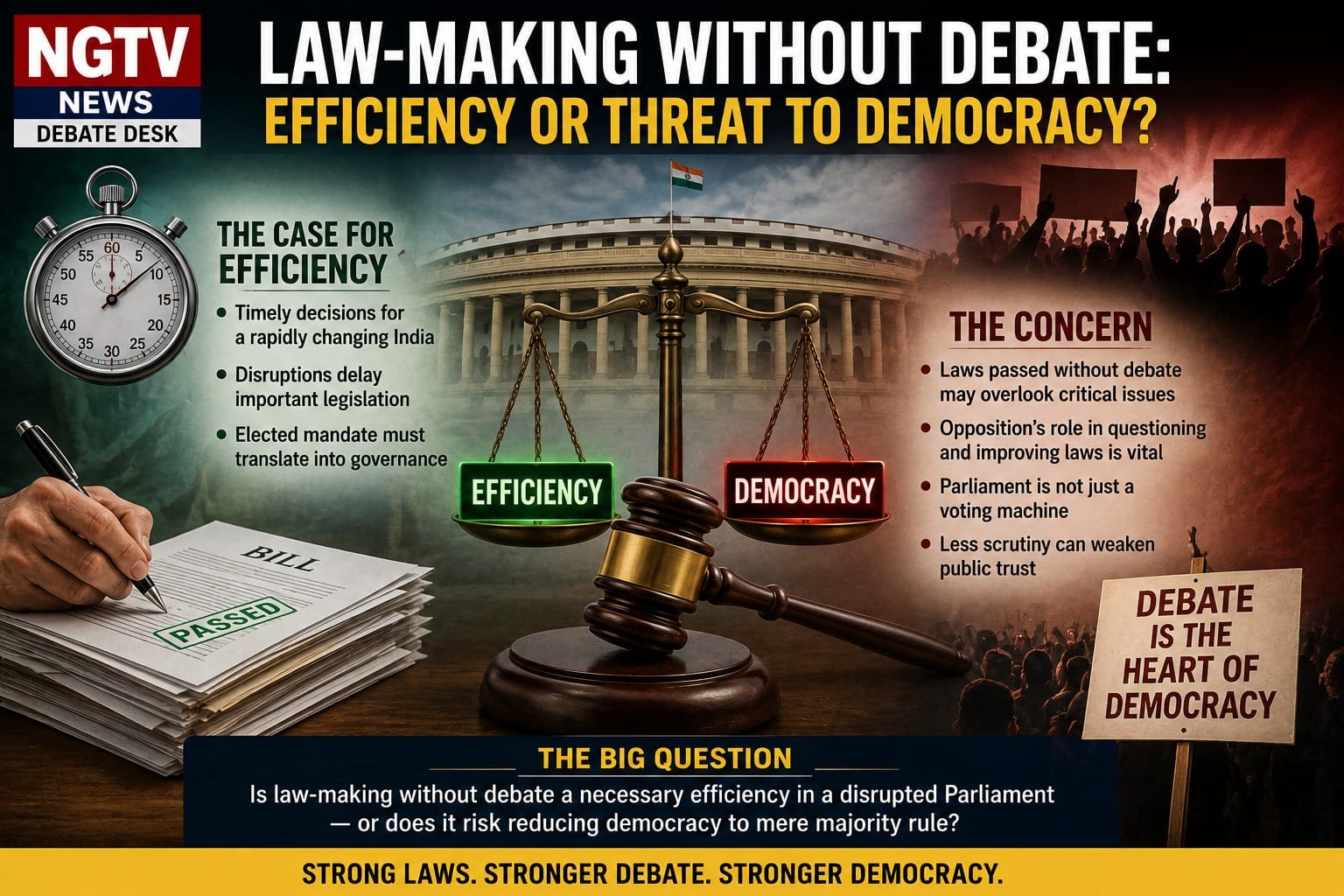
LAW-MAKING WITHOUT DEBATE: EFFICIENCY OR THREAT TO DEMOCRACY?
NEW DELHI | SPECIAL DEBATE | 29 AUGUST 2026
NEWS DESK: The recently concluded Monsoon Session of Parliament has brought a fundamental democratic question back into focus: Can legislation be considered effective if it is passed quickly but receives little parliamentary debate?
The issue is not simply about how many Bills are passed. It is about how thoroughly those Bills are examined before they become laws affecting millions of citizens.
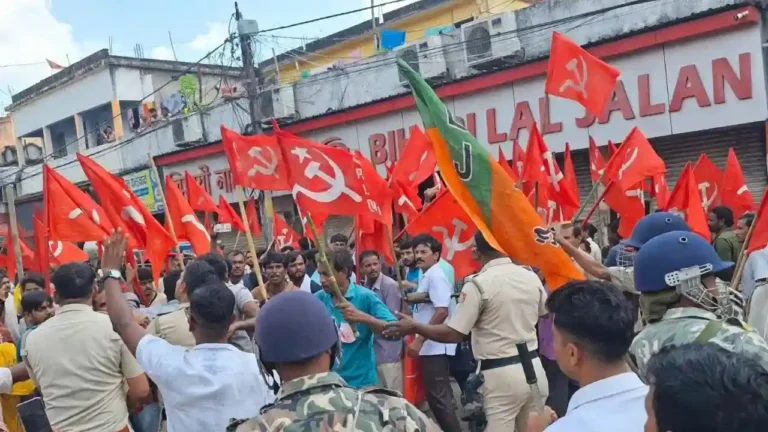
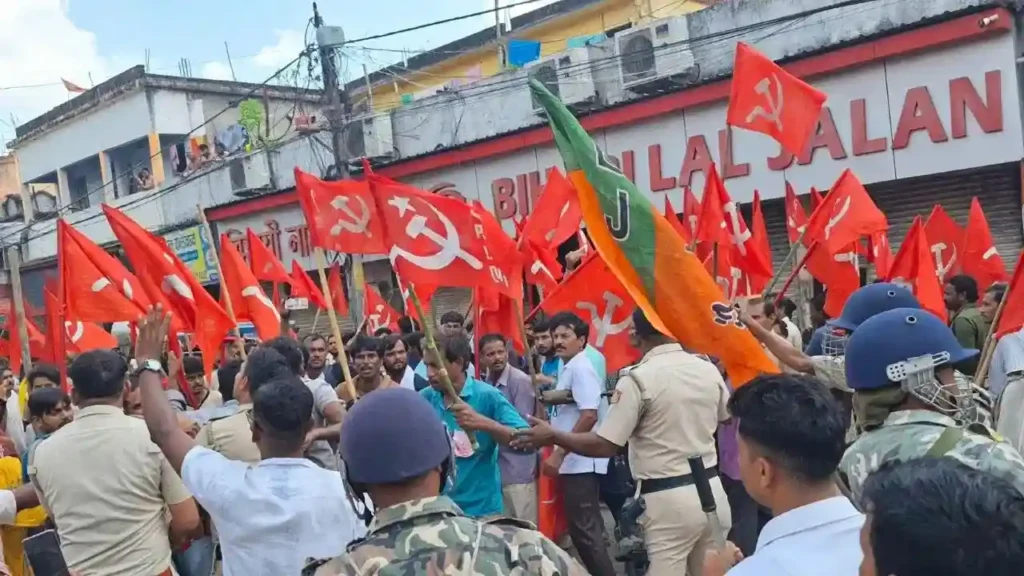
During the 2026 Monsoon Session, Parliament passed several important pieces of legislation, while concerns were also raised over disruptions and limited time for discussion on some Bills. The Lok Sabha reportedly functioned for only a fraction of its scheduled time, while several Bills were passed with limited participation from MPs.
This has created a sharp debate over where the line should be drawn between efficient governance and democratic scrutiny.
⚖️ THE CASE FOR EFFICIENCY
Supporters of faster law-making argue that Parliament cannot remain paralysed by repeated disruptions.
India is a rapidly changing country. Issues involving technology, taxation, education, business, national security and the economy often require timely government action. When parliamentary proceedings are repeatedly interrupted, important legislative business can be delayed.
From this perspective, speed does not automatically mean a lack of democracy.
The government has an electoral mandate and, when it has the required majority, it has a responsibility to deliver on its legislative programme. Bills are introduced, debated according to parliamentary procedures and ultimately decided through voting.
Supporters therefore argue that prolonged debate should not become an excuse for preventing the government from functioning.
🏛️ BUT IS PASSING A BILL THE SAME AS SCRUTINISING IT?
This is where the strongest criticism begins.
Parliament is not simply a place where numbers are counted. Debate gives elected representatives an opportunity to question provisions, identify possible problems, raise concerns from their constituencies and suggest amendments.
When legislation moves through Parliament with minimal discussion, critics argue that important questions may remain unanswered.
The concern becomes particularly significant when legislation has long-term consequences for citizens, businesses, institutions or public administration.
The central question is therefore:
«If detailed debate can improve legislation, should important Bills be guaranteed a minimum level of parliamentary scrutiny?»
🔥 THE OPPOSITION’S ARGUMENT
The Opposition can argue that democracy does not end when an election is over.
The government may possess the numbers required to pass a Bill, but the Opposition’s parliamentary role includes questioning the executive and examining its proposals.
Without meaningful discussion, critics argue, Parliament risks becoming primarily a mechanism for approving decisions already taken by the government.
There is also the question of parliamentary committees. Committee examination can allow lawmakers to study complicated provisions in greater detail and consider different perspectives before legislation is finalised.
For citizens, this process matters because laws passed in Parliament can affect education, taxation, businesses, public services, economic activity and everyday rights and responsibilities.
⚠️ BUT THE OPPOSITION ALSO HAS RESPONSIBILITIES
Criticism cannot rest entirely on the government.
If Opposition parties repeatedly disrupt parliamentary proceedings, they can prevent the very debate they demand.
This creates a democratic paradox:
If the government rushes legislation, scrutiny suffers.
If the Opposition prevents Parliament from functioning, scrutiny also suffers.
A healthy parliamentary system requires disagreement—but disagreement must ultimately take place inside the democratic process rather than preventing that process from functioning.
🔍 THE REAL ISSUE
The debate should therefore move beyond the familiar government-versus-Opposition argument.
The larger question is whether Parliament can establish a system that protects both efficiency and scrutiny.
Should important Bills automatically be referred to parliamentary committees?
Should MPs receive a minimum amount of time to debate major legislation?
Should there be greater consultation with experts and stakeholders?
Should repeated disruptions carry consequences?
And should the government be permitted to proceed with legislation when Opposition members choose not to participate?
These questions deserve serious consideration because parliamentary democracy depends not merely on majority rule, but also on accountability, discussion and institutional checks.
🎙️ NGTV NEWS — THE CENTRAL DEBATE QUESTION
«“Law-Making Without Debate: Is It Necessary Efficiency in a Disrupted Parliament—or Does It Risk Reducing Democracy to Mere Majority Rule?”»
FINAL WORD
A functioning democracy needs both speed and scrutiny.
A government must be able to govern. An Opposition must be able to question. Parliament must be able to debate. And citizens deserve laws that have been examined carefully before they affect their lives.
The real challenge is therefore not choosing between efficiency and debate.
It is finding a system in which efficiency does not become an excuse for avoiding scrutiny, while disruption does not become an excuse for avoiding responsibility.
— NGTV NEWS | DEBATE DESK