
NGTV NEWS | DEBATE
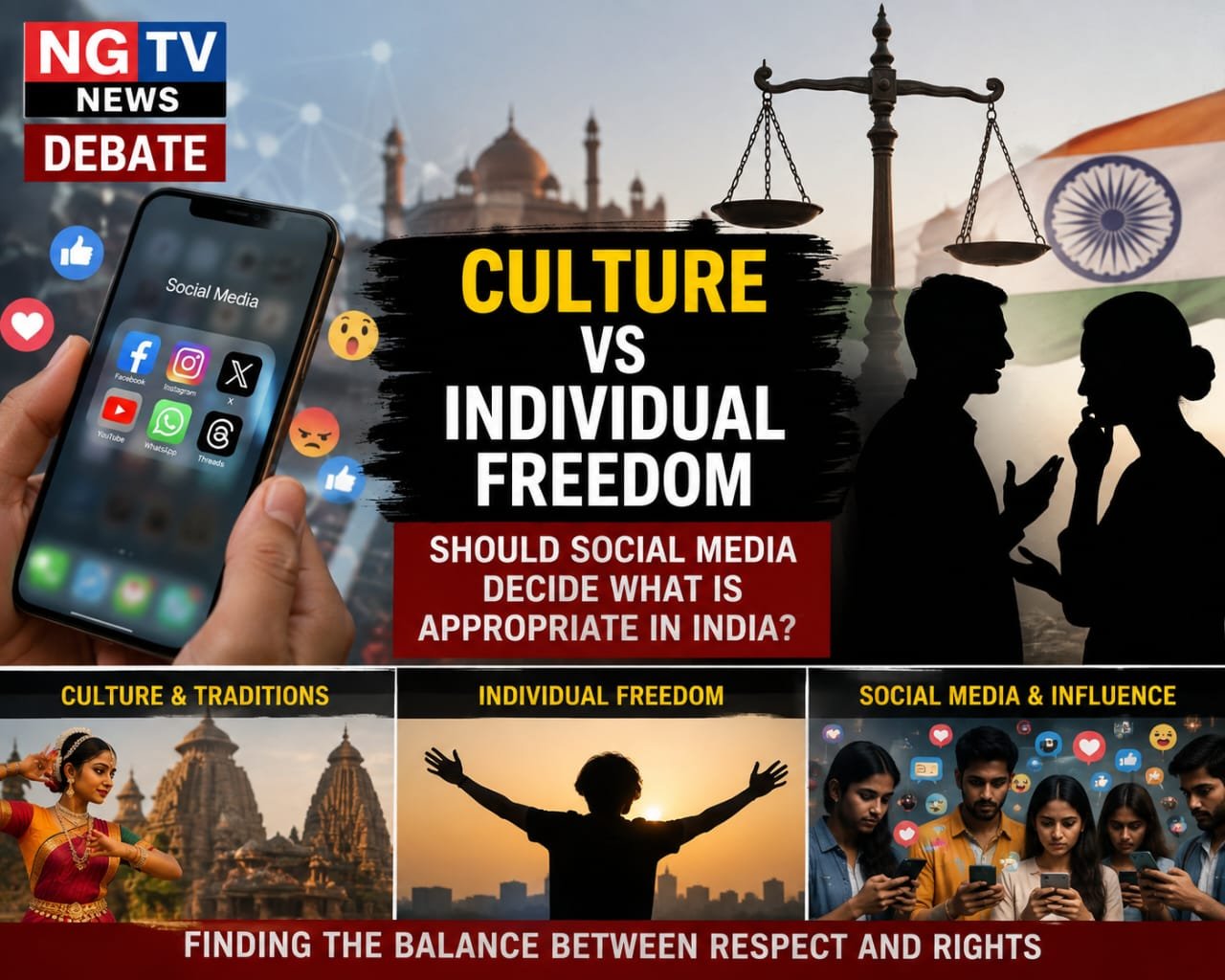
Culture vs Individual Freedom: Should Social Media Decide What Is Appropriate in India?
NEW DELHI, AUGUST 27, 2026: Social media has become one of India’s most influential public spaces, but it has also raised a difficult question: who gets to decide what is appropriate—the individual, society, the government or the platforms themselves?
India’s cultural diversity makes the question particularly complex. What one community considers offensive may be viewed by another as satire, criticism or creative expression. Social-media platforms therefore face the difficult task of moderating content across different languages, traditions and social contexts. Recent discussions between the government and technology companies have focused precisely on whether automated systems can adequately understand India’s cultural and linguistic nuances.
At the heart of the debate is individual freedom. Article 19(1)(a) of the Constitution protects freedom of speech and expression, although that freedom is subject to reasonable restrictions prescribed by law.
Supporters of stronger moderation argue that social media cannot become a free-for-all. Hate speech, harassment, deliberate deception and harmful material can have consequences far beyond a smartphone screen. The government has also strengthened rules concerning unlawful and AI-generated content.
But critics warn against allowing private platforms or authorities to become the final arbiters of cultural acceptability. Excessive moderation can silence legitimate criticism, satire and unpopular opinions, creating a climate of self-censorship.
The real challenge, therefore, is not choosing between culture and freedom. It is finding a transparent and proportionate balance where cultural sensitivity protects people without becoming a tool to suppress legitimate expression.
NGTV NEWS | DEBATE DESK